
Why Birds Belong in the Vegetable Garden
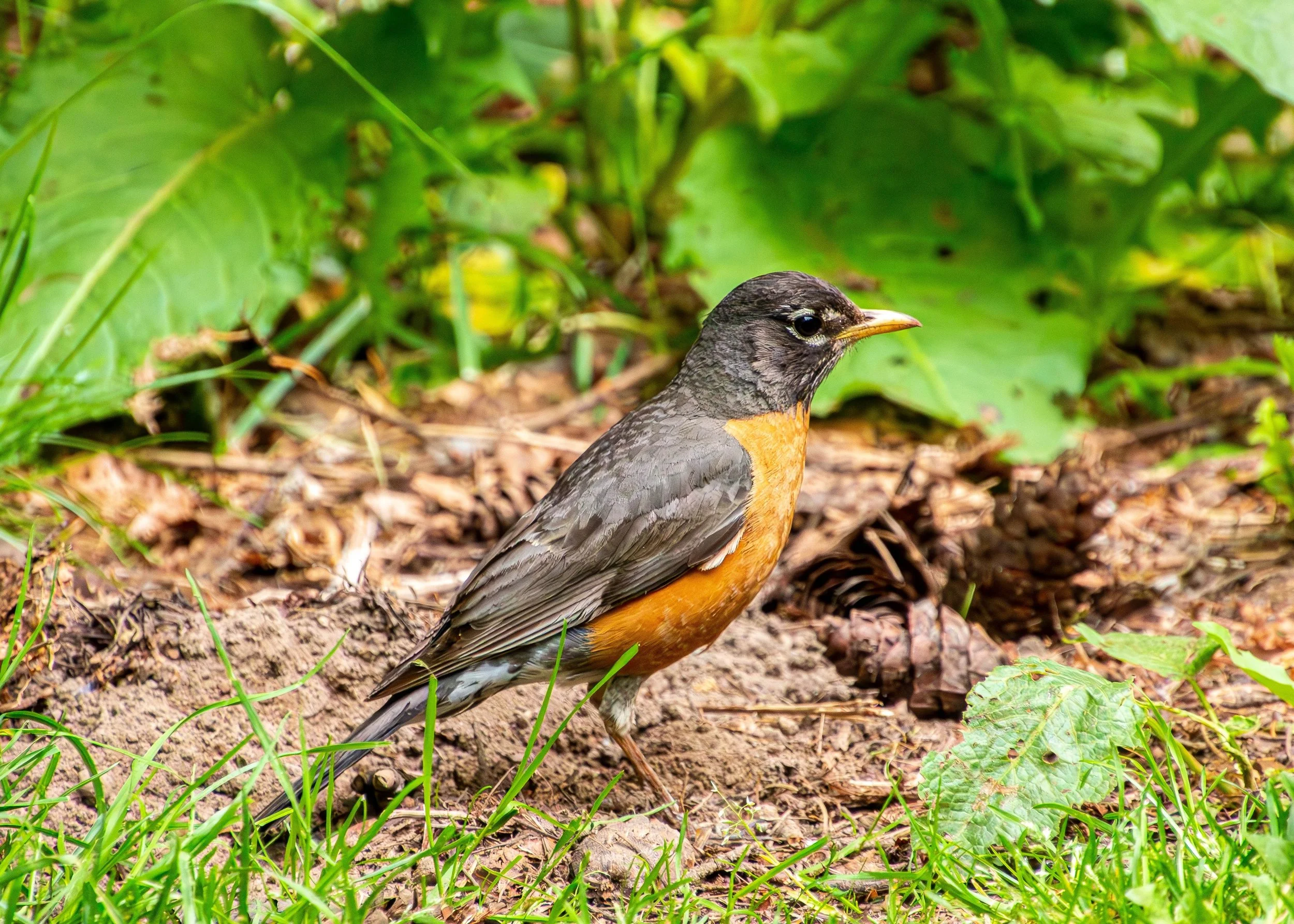
by Gary Ingram
In the evening, I sometimes climb up on our compost pile and stand still above the garden beds. The birds are still working. Not with the urgency of morning, but with a kind of quiet purpose—moving from bed to bed, stopping, listening, picking. If you watch long enough, you begin to see what they’re actually doing. They’re not just visiting the garden, they’re tending it.
The Unseen Workforce
Most of what birds take from a garden, we never notice: Insect larvae tucked beneath leaves, slug eggs hidden in the soil, aphids and soft-bodied pests, beetles and caterpillars in their early stages.
This is where the real value lies—not in dramatic moments, but in constant, quiet pressure on pest populations. A single bird, moving steadily through a garden, can remove hundreds of insects in a day. Not enough to eliminate pests entirely—but enough to keep the system in balance. That’s the key: birds don’t sterilize a garden. They stabilize it.
Why Evening Matters
Morning gets most of the attention due to their beautiful songs, especially in the spring, but evening is different. By late day, many insects are more exposed or less active, slugs begin to emerge, the light softens. and the garden slows. Birds shift into a more deliberate rhythm—less frantic, more precise. They are finishing their day the same way a good gardener might, by not rushing, but walking the rows and paying attention.
Compost, Soil, and Life
On our farm, the compost pile is the center of activity. It’s warm, alive and full of transformation. That life doesn’t stay in the pile—it spreads outward into the beds with my assistance. Microbial activity increases, insect populations follow, and birds follow the insects.
From above, you can see it clearly: Waste becomes compost. Compost feeds the soil. Soil feeds the plants. Plants attract insects. Birds move through and complete the cycle.
This is not separate systems working independently. It is one continuous movement.
Designing a Garden that Birds Want
If we want birds to work our gardens, we need to make the garden worth working:
• Diverse plantings (not monoculture beds)
• Open soil access (not everything mulched or covered)
• Nearby structure (shrubs, trees, or fencing for perching)
• Water (even something simple and shallow)
• No chemical sprays that disrupt the food chain
A garden that invites birds is a garden that accepts a little imperfection. Some leaves will have holes. That’s the price of a living system—and also the sign that it’s working.
A Shift in Perspective
It’s easy to think of the garden as something we manage, but when birds are present, that idea softens. You begin to see that you are not the only one tending the space. There are others working alongside you—quietly, consistently, without recognition.
Standing in the System
From the compost pile, watching the birds in the evening, it becomes clear: The garden does not depend on me as much as I think. It responds to what I set in motion—soil, structure, care—but then it carries itself forward. The birds are part of that as participants, not visitors. If we make space for them, they will do their work, every day, whether we’re watching or not.
Birds I Often See Hunting in Our Gardens
· Robin - One of the best insect and slug predators. Hunts by sight—pulls slugs right out of soil. Also eats slug eggs in disturbed soil.
· Junco - Constant ground scratchers. Excellent at finding eggs and tiny juveniles
· Song Sparrow - Methodical, persistent. Works through beds and edges—great for egg clusters.
· Varied Thrush - More forest-oriented. Will forage in garden margins and moist areas.