
Two Overwintering Systems for Vegetable Gardens
by Gary Ingram
A Layered Mulch System
Our system of overwintering vegetable garden beds has developed over the years. Our growing beds are about four feet wide and between 20 and 25 feet long. They are mounded and have two-foot paths between them. We never walk on our beds and only use hand tools to cultivate. We built our first three beds in July 2000 and the other 10 beds when we moved onto the land in 2003.
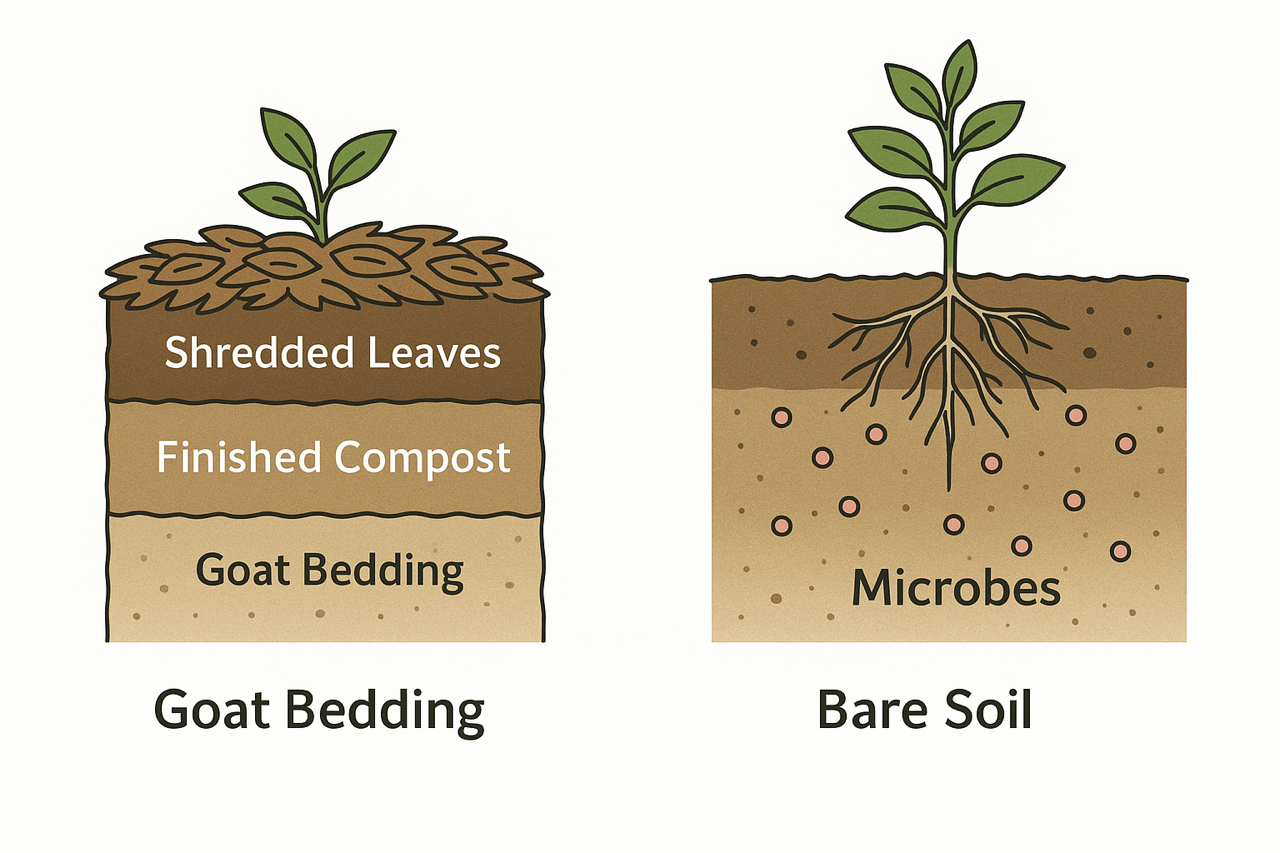
The mulch system we use is a biologically rich approach built from materials already present on our farm – goat bedding (manure, urine and spilled alfalfa), a 2-inch layer of finished compost, and a thin cover of shredded alder leaves. This creates a layered, slow-decomposing compost blanket that protects the soil and feeds it steadily through the winter.
Benefits of a Layered Mulch System
The first layer is about 2" of goat bedding. The goat manure and urine provide nitrogen, phosphorus, potassium, sulfur and trace minerals. Spilled alfalfa mixed in the bedding adds carbon, minerals and the natural growth stimulant triacontanol, which helps microbes remain active even in cooler conditions.
The second layer is 2" inches of finished compost. This cap protects the nitrogen-rich bedding layer from rain-driven nitrogen loss, introduces stable organic matter, adds a diverse microbial inoculum, creates a buffer between the bedding and the surface environment and supports earthworm activity, which continues even during mild winter periods.
The third layer is shredded alder leaves (1/2” to 1” or just enough to cover). Alder leaves bring several unique benefits, but all leaves are good. The leaf layer buffers temperature swings, shelters fungal hyphae, and keeps the compost surface biologically active.
This layer provides moisture management since leaves act like a breathable roof, slowing heavy-rain impact while allowing gases and moisture to pass. Alder leaves break down rapidly and feed fungal networks, producing the crumbly soil structure (tilth) that vegetables love.
Together, these three layers mimic a forest-floor, soil-building process: nutrient-rich interior layers insulated by a light, protective leaf skin.
Cover Crop System
Alternative to our system is the more popular one of using winter cover crops. Here is the scoop, a system that doesn’t work for us because we have a large population of shrews, a small mouse-like rodent that loves to eat seeds. They are beneficial for us in our garden as long we don’t direct seed anything, including winter cover crops.
Benefits of a cover crop system
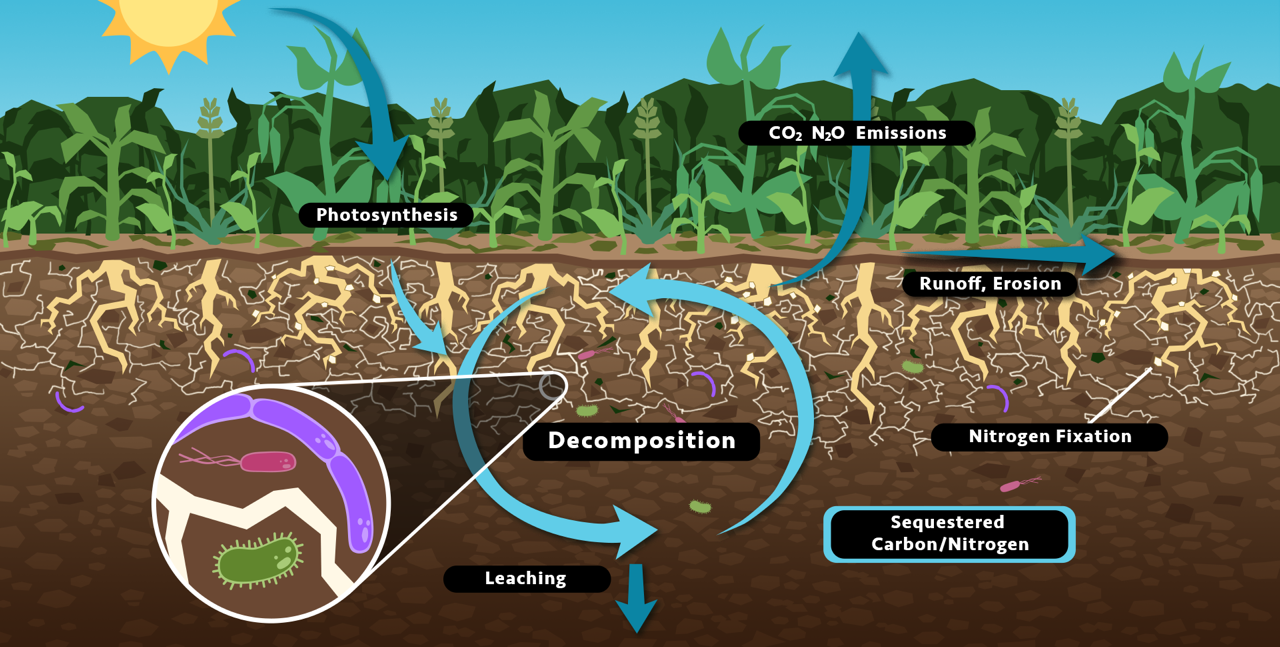
Cover crops provide living roots that feed soil life all winter, keeping the soil biologically active because roots leak sugars into the soil. Microbes stay awake and working all winter and the fungal networks stay intact instead of going dormant. This leads to better spring structure and faster nutrient cycling
Cover crops prevent nitrogen leaching during heavy winter rains. This is one of the top benefits in Western Washington. Winter rains can wash nitrates deep into the subsoil where vegetables can’t reach them. Cover crops capture and hold nitrogen in their roots and foliage, acting like a nutrient “bank account."
Cover crops protect soil from erosion and heavy rain impact. The canopy softens raindrop impact, prevents crusting, reduces runoff and keeps soil aggregates from breaking down. Beds stay fluffier and better drained.
Cover crops suppress winter and early spring weeds. A dense winter cover crop canopy blocks winter weed germination, outcompetes weed seedings and leaves fewer seeds to cause problems in spring. This is especially helpful against chickweed and bittercress.
Cover crops when planted to be incorporated into the soil in the spring while still green improve spring soil structure. This kind of cover cropping is also called green manure. It improves soil porosity, reduces compaction and speeds up infiltration.
When you chop the cover crop in April, you add a surge of biomass, feed the soil bacteria, improve long-term carbon content and promote stable humus formation.
Cover crops are the better choice if
- You want to avoid material hauling
- You have large fields—they’re easier and cheaper to apply
- You have sloped beds prone to erosion
- You want deep-rooted soil structure improvement
- You won’t be planting until April or May
A layered mulch system is the better choice if
- You need beds ready immediately in spring
- You prefer no tilling or chopping
- You want maximum winter weed suppression
- You have available spent farm animal bedding
Both systems excel—just in different ways. Both systems are greatly superior to leaving your garden soil bare through the winter!